
This article provides general business and accounting information. Examples are illustrative. Actual accounting, tax, legal and compliance treatment depends on the facts, entity type and provisions applicable to the relevant period.
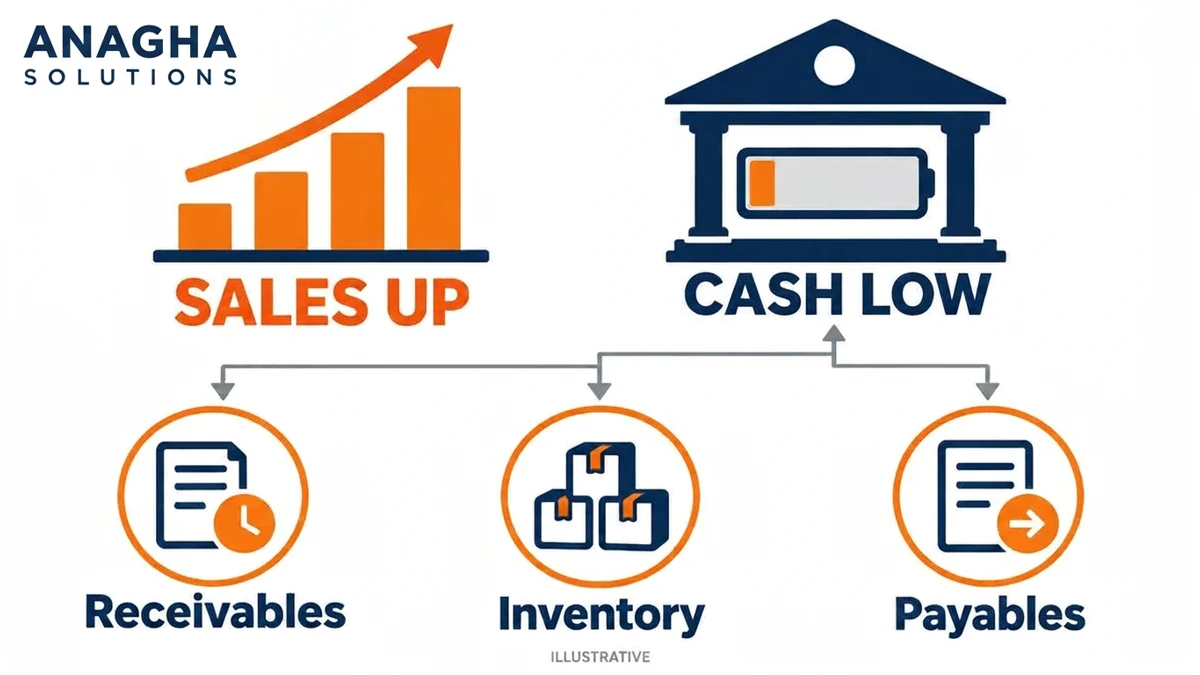
The sales report looks encouraging. Orders are coming in. Yet when salaries or supplier payments are due, you are moving money between accounts and following up with customers.
It is reasonable to ask: if the business is doing well, where did the money go?
Start by separating three numbers: sales recorded, profit earned and cash collected. They answer different questions.
A sale is not the same as cash collected
A credit invoice can appear in your accounts before the customer pays. Meanwhile, you may have paid for materials, staff or delivery. A larger order can therefore increase the amount of money the business needs before it improves the bank balance.
Money may also be sitting in slow-moving stock, supplier advances or deposits. Buying equipment and repaying loan principal use cash, but do not pass through the profit calculation in the same way as ordinary operating expenses. Loan interest needs separate treatment. In a proprietorship, owner drawings should also be distinguished from business expenses; companies require different treatment for payments to owners/directors.
A simplified example
Imagine a business with ₹1,00,000 accounting profit for a month. Assume there are no non-cash adjustments. Receivables increase by ₹80,000 and inventory increases by ₹40,000, with payables unchanged.
The simplified operating cash movement is ₹1,00,000 − ₹80,000 − ₹40,000 = negative ₹20,000. The business can show a profit while using cash. Tax payments, asset purchases, borrowing and owner transactions would need separate reconciliation; this example is not a full cash-flow statement.
What to check this week
Ask for a list of outstanding invoices with due dates, slow-moving stock and payments falling due. Put expected receipts and committed payments into a weekly forecast. Separate confirmed collections from optimistic promises.
Review that forecast against actual receipts each week. If an expected payment moves, update the plan before committing to another purchase.
Borrowing may be appropriate in some circumstances, but first establish whether the shortage comes from growth, delayed collection, thin margins or recurring losses. Each needs a different response.
Editorial context & sources
Editorial source: S1. The forecast and example above are original management illustrations.
Source references are provided for educational context and do not imply review or endorsement by the referenced institution.
Need help understanding why profit and cash are moving differently? Discuss a cash-flow and receivables review with Anagha Solutions.
Discuss with Anagha SolutionsDiscuss your requirements
Please do not share passwords, OTPs, bank credentials or sensitive financial documents.